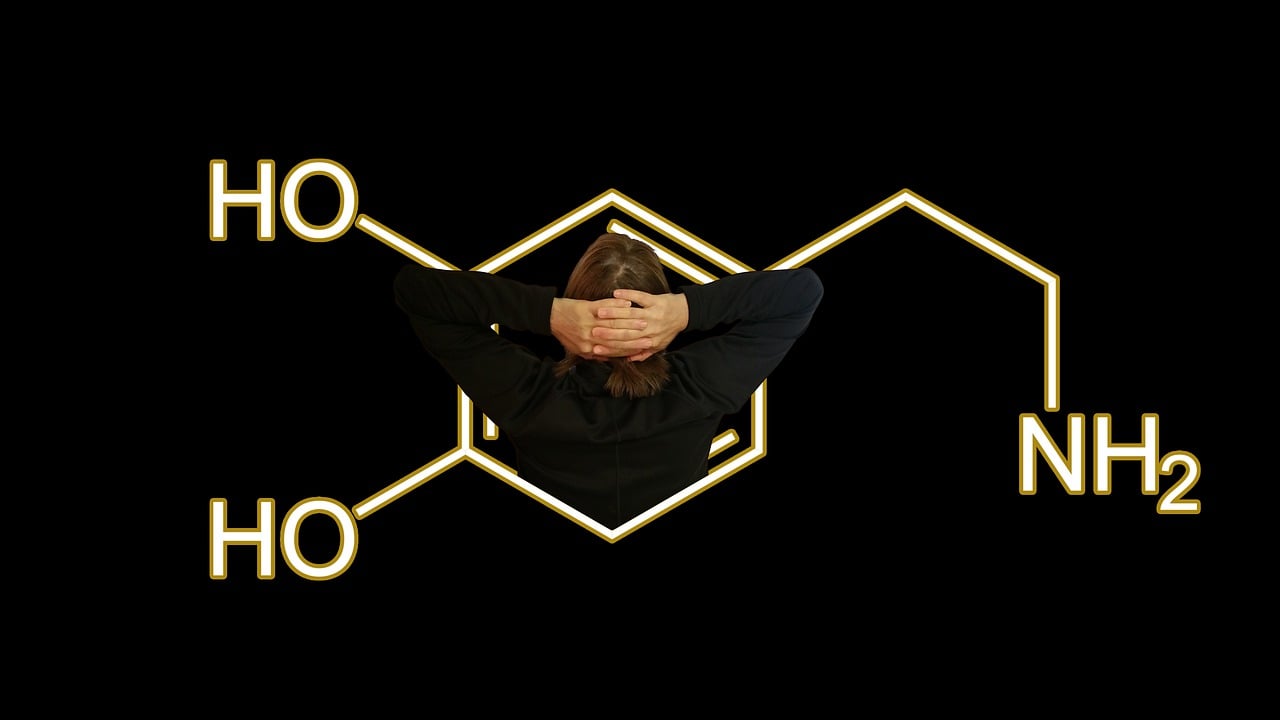
You reach for your phone before your eyes fully open.
If your mornings already feel heavy, you can read more about why waking up clear-headed is so difficult and how to fix it.
→ Why It’s Hard to Wake Up in the Morning: Causes and a Practical Morning Routine
By the time you sit at your desk, your brain has already gone through:
- Dozens of short videos and headlines
- Several chat threads
- A few quick emails
- Maybe a snack or sweet drink on the way
None of these feel like a big deal on their own.
Together, they create a familiar pattern:
- You feel restless, but not deeply motivated.
- It is hard to stay with one task.
- Quiet moments feel uncomfortable, so you fill them with more stimulation.
At some point, you search for solutions and find “dopamine detox” or “dopamine fasting.”
Most versions sound extreme:
- No phone
- No music
- No talking
- No entertainment
for 24 hours or more.
The idea behind it is real. Life today does overload your brain with frequent, strong signals.
But the usual “dopamine detox” advice is not built for normal people with jobs, families, and real limits.
What you need is not a dramatic fast.
You need a calmer, more realistic way to turn the volume down.
What Overstimulation Really Looks Like in Daily Life
Overstimulation does not feel like a single big event.
It feels like too many small hits stacked together.
A typical day might look like this:
- In bed: you scroll through notifications and short videos.
- On the way to work: more feeds, messages, and news.
- At work: you bounce between inboxes, chat apps, and tabs.
- In breaks: you snack, check social media, or browse for something to buy.
- At night: you try to “relax” with more screens and fast-moving content.
By the end of the day:
- Your brain is tired but wired.
- Deep work feels heavy.
- Simple tasks feel boring.
- You want something quick and easy, not something slow and meaningful.
This is what many people call “dopamine overload.”
You are not broken.
Your brain is simply responding to the environment you gave it.
What Dopamine Actually Does (and Does Not Do)
Dopamine is often described as a “pleasure chemical.”
That description is incomplete and misleading.
For a medical overview of dopamine and why “dopamine fasting” is often misunderstood, see this explanation from Harvard Health.
Dopamine is:
- A normal neurotransmitter
- Involved in motivation, learning, and reinforcement
- Released when your brain expects or receives something important
It responds to:
- Rewards and surprises
- Progress toward goals
- Predictions that “something good is about to happen”
It does not mean:
- “This is bad for you.”
- “This is pure pleasure only.”
- “You must remove it from your life.”
The problem is not dopamine itself.
The problem is how often and how intensely you trigger that system.
When your day is packed with fast, intense signals, your brain adjusts:
- Slow, quiet tasks feel relatively less rewarding.
- You become more sensitive to boredom.
- You crave “just one more” quick hit whenever there is a gap.
Over time, that makes deep work, simple chores, and even rest feel harder to enter and stay in.
Why Extreme Dopamine Fasts Don’t Fit Real Life
Strict dopamine fasts usually come with rules like:
- No phone or internet
- No talking
- No entertainment
- Sometimes no reading or work at all
For a small number of people, as a one-day experiment, this can be interesting.
For most people, it fails for three main reasons.
- It ignores real constraints.
You still have work, family, and obligations. A total fast is not sustainable. - It labels normal tools as toxic.
You start to see your phone, music, or games only as enemies, not as things to be used with limits. - It skips gradual change.
Your habits were built over months or years. They will not fully “reset” in a single weekend.
A recent summary of dopamine detox research also notes that sustainable change comes from balanced, long-term habits rather than short, extreme fasts. Read the overview here.
A more useful approach is quieter:
Not “no dopamine,”
but less frequent, less intense, and more intentional stimulation across your day.
This is what a realistic dopamine detox tries to do.
A Realistic Dopamine Detox: Redesign Your Daily Stimulation Curve
Instead of a dramatic one-day fast, think of dopamine detox as this:
Redesign the shape of your day so your brain gets more quiet stretches and fewer constant spikes.
The goal is to:
- Lower the background noise
- Make calm states easier to reach
- Make deep focus feel less painful
- Make simple tasks tolerable again
There are three main levers you can adjust.
1. Reduce “Always-On” Stimulation Windows
One major issue is not stimulation itself, but continuous stimulation.
Your brain needs periods when nothing loud is happening.
Pick one or two windows in your day to protect:
- Morning: first 30–60 minutes after waking
- No short-form feeds
- No rapid scrolling between apps
- Allow only one slow input: music, a podcast, or silence
- Work blocks: 60–90 minutes of focused work
- One main task on your screen
- Non-urgent notifications off
- No “just checking” social media or shopping during the block
- Evening: last 60 minutes before bed
- No fast-paced videos, arguments, or heated online discussions
- Choose one slow activity instead: reading, light stretching, journaling, or simple tidying
You are not removing stimulation from your life.
You are creating islands of quiet inside a loud day.
Those islands are where your brain can recover.
2. Swap Loud Hits for Quieter Alternatives
Some inputs are especially “loud” for your reward system:
- Endless short-form video
- Strongly processed snacks and drinks
- Rapid notification cycles
- Fast, highly competitive games
You do not have to quit all of them at once.
Start by softening one or two.
Examples:
- Short-form video
- Limit it to a set time window (for example, 20 minutes in the evening).
- Or replace some of it with one longer, more intentional video.
- Impulsive snacks
- Move from constant grazing to one or two planned snack times.
- Choose options that are a little slower to consume and less extreme in flavor.
- Notification storms
- Turn off non-essential alerts.
- Check messages in batches instead of reacting instantly.
- Fast, intense games
- Rotate in slower, more strategic games.
- Or replace part of that time with a non-digital hobby once or twice a week.
The principle is simple:
Move from “loud and automatic” to “quieter and chosen.”
You will still get enjoyment.
But it will come with more control and less spillover into the rest of your day.
3. Practice Small Pockets of “Quiet Boredom”
Overstimulation makes boredom feel dangerous.
Every short gap becomes uncomfortable:
- Waiting in line
- Standing in an elevator
- Sitting on a train
- Pausing between tasks
Your hand goes to your phone almost before you notice the urge.
To rebuild tolerance, use small moments as training:
- In short queues, do nothing on purpose.
- On very short walks, leave your phone in your pocket.
- During micro-breaks at your desk, stare out the window instead of opening a new tab.
At first this will feel wrong.
You might feel restless or even a little anxious.
That is the adjustment process. You are teaching your brain:
“A quiet moment is not a threat.
I do not need to escape every pause.”
As this tolerance grows, it becomes easier to:
- Start deep work
- Stay with a single task for longer
- Rest without constant stimulation
How This Helps Your Focus and Energy
When you lower the overall stimulation level:
- Your baseline becomes calmer.
- You feel less pulled by every ping or craving.
- Deep work blocks feel less like a fight.
- Evening shutdown and sleep become easier.
This connects naturally with other routines:
- A deep work block fits into your low-stimulation work windows.
→ Deep Work for Tired Brains: 90-Minute Focus Blocks - A smartphone routine reduces the loudest digital hits.
→ How to Reduce Smartphone Use: A Simple Daily Routine for Screen-Tired Brains - A shutdown routine supports the quiet last hour of your day.
→ Evening Shutdown Routine: How to Land the Day Calmly
Dopamine detox is not a separate, dramatic event.
It is a quiet layer that supports all of these habits.
Summary: Turn the Volume Down, Not Your Life Off
Dopamine detox is often presented as a radical fast.
For most people, what works is much simpler.
A realistic dopamine detox gives you:
- Fewer “always-on” periods of stimulation
- Softer, more intentional sources of reward
- Small daily practice in tolerating quiet and boredom
- Better conditions for focus, calm, and sleep
You do not need to erase pleasure or cut every screen.
You need to turn the volume down enough that your brain can hear itself think again.
This week, choose one experiment:
protect one quiet work block,
one quiet morning,
or one quiet last hour of the day.
Notice what changes.
On especially noisy days, you can start with a simple 20-minute mental overload reset before you begin this dopamine detox.
-> 20-Minute Mental Reset: How to Recover Your Brain from Overload
Q1. Do I need a full 24-hour dopamine detox to feel a difference?
A. No. For most people, a strict 24-hour fast from all stimulation is not realistic or necessary. You can feel a clear change by lowering constant stimulation in a few key windows: the first 30–60 minutes after waking, one 60–90 minute focus block during work, and the last hour before bed.
Q2. Will a dopamine detox make life feel boring or joyless?
A. It shouldn’t. A realistic dopamine detox is not about removing all pleasure. It is about turning down loud, automatic stimulation so you can actually enjoy what you choose to do. You still keep entertainment and social time, but in clearer, shorter windows instead of all day in the background.
Q3. How long does it take for a dopamine detox to improve focus?
A. Many people notice small shifts within one to two weeks—falling asleep a bit easier, feeling slightly less pulled by notifications, or staying on one task a little longer. Deeper changes, like stronger tolerance for boredom and easier deep work, usually build over months of small, repeated adjustments.
Q4. Can I do a dopamine detox if my job is screen-heavy?
A. Yes. The goal is not to avoid screens completely but to reduce unnecessary, high-intensity inputs. You can still work on a computer while turning off non-essential notifications, keeping only one main task on your screen, and limiting short-form feeds or random browsing to specific breaks.