Doomscrolling Is Draining Your Mental Energy (Especially at Night)
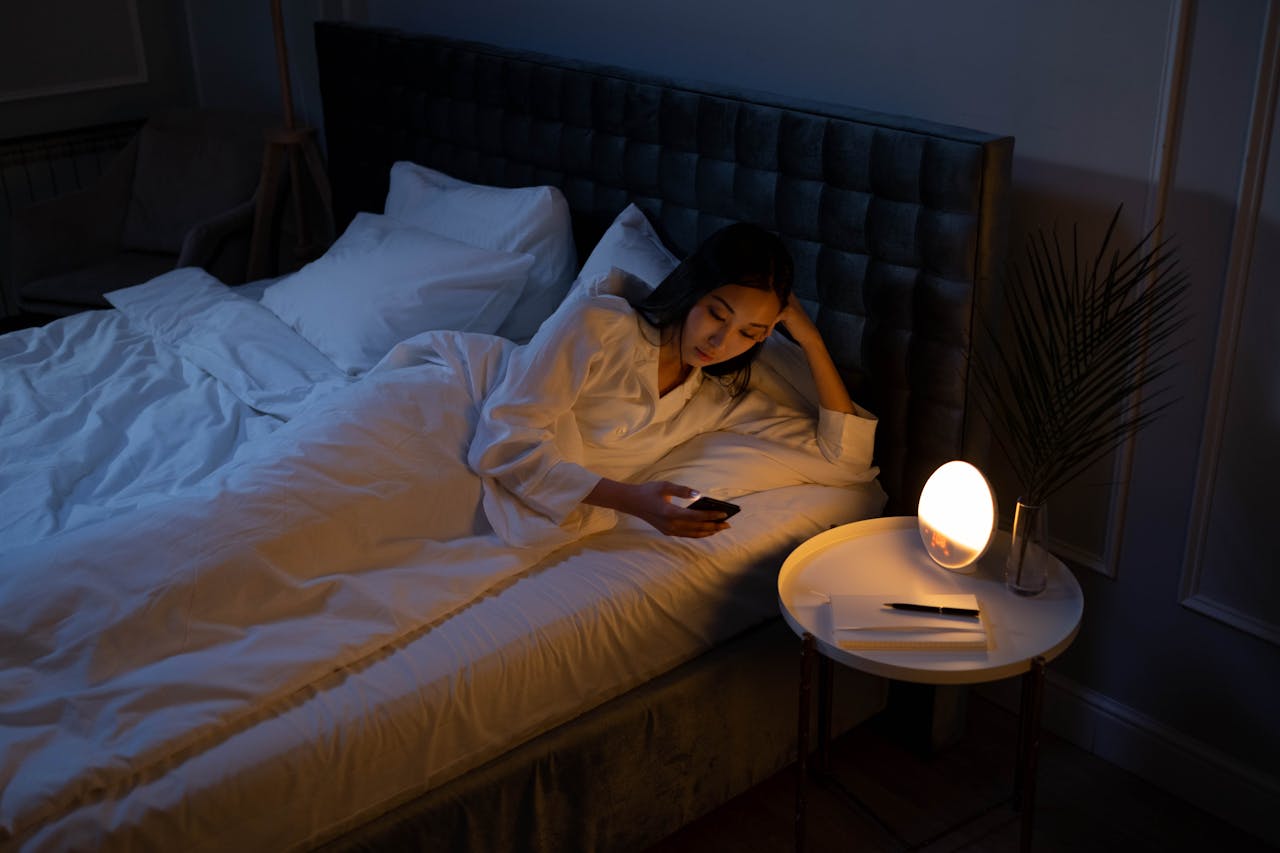
You lie down “just to check” your phone before sleep.
Twenty minutes later, you have scrolled through war headlines, layoffs, celebrity drama, and angry comment sections. Your body is in bed, but your mind is still running at full speed. When you finally put the phone down, your chest feels tight and your thoughts are loud.
The next morning you wake up with heavy eyes, a busy mind, and low mental energy. It feels like you haven’t rested at all.
This pattern has a name: doomscrolling. It is one of the fastest ways to burn through your stress system and mental fuel without even leaving your bed.
This article looks at:
- what doomscrolling actually does to your brain and energy,
- why it is hard to stop even when you know it is bad,
- and a simple night protocol that protects your mental energy instead of feeding your anxiety.
What Doomscrolling Really Is
Doomscrolling is the habit of compulsively scrolling through negative news or social media, even when it clearly makes you feel worse.
Typical signs:
- You lose track of time while scrolling.
- You feel more anxious or drained after checking your phone.
- You tell yourself you will stop, but you “just check one more thing” for another 15–30 minutes.
- You often scroll in bed, right before sleep or immediately after waking up.
It is not just “using your phone a lot”.
It is a specific attention pattern:
Your brain keeps searching for new information,
but most of what it finds only increases your sense of threat and helplessness.
That combination is exactly what exhausts mental energy.
How Doomscrolling Hijacks Your Stress System and Mental Energy
Doomscrolling is a perfect storm:
it activates your threat system, overloads your working memory, and cuts into the sleep window that should restore your energy.
- Your brain treats the feed like a threat radar
Negative headlines, disaster images, and conflict threads are not neutral data.
Your brain reads them as possible threats:
- Your stress system becomes more active.
- Heart rate and arousal increase, even while you lie still.
- Your brain keeps asking, “Am I safe? What else do I need to know?”
This is useful when danger is real.
It is draining when it is coming from a feed you cannot control and cannot act on.
Recent research has linked doomscrolling to worse mental well-being and life satisfaction.
Before sleep, this is especially costly. You are telling your brain:
“The world is on fire. Stay alert.”
That is the opposite of the message your nervous system needs at night.
- Cognitive overload and mental clutter
Every news story, video, or comment thread is another open “tab” in your mind.
Your brain has to:
- store fragments of each story,
- compare them to what you already know,
- and process the emotional impact.
Most of this information is not actionable.
It only adds to cognitive overload – a state where your brain is holding more input than it can meaningfully process.
The result:
- a feeling of mental clutter,
- difficulty entering deep work the next day,
- and a vague sense of exhaustion even after enough hours in bed.
- Late-night doomscrolling steals your sleep quality
Many people doomscroll right before sleep.
At that time:
- Light and stimulation delay your natural sleep signals.
- Emotional arousal keeps your brain in “problem-solving mode”.
- Sleep can become lighter and more fragmented.
Even if you sleep 7–8 hours, the restorative quality of that sleep is lower.
You wake up technically rested by the clock, but mentally you feel like you never logged off.
Why You Keep Doomscrolling Even Though It Feels Bad
If doomscrolling feels so draining, why do you keep doing it?
There are a few predictable mechanisms.
- Variable rewards and fear of missing out
Feeds are built like slot machines for attention:
- Most posts are low-value.
- Sometimes you hit something highly emotional, interesting, or relevant.
- Your brain learns to keep scrolling “just in case” the next post is important.
On top of that, fast news cycles trigger fear of missing out:
“What if something big happens and I don’t know?”
You keep scrolling not because it feels good,
but because it feels unsafe to stop.
- Avoiding uncomfortable thoughts
Late at night, when external noise is lower, you finally notice:
- unresolved worries about work, money, or relationships,
- vague anxiety about the future,
- or dissatisfaction with how the day went.
Doomscrolling offers an easier task than facing those thoughts:
“I’ll just see what’s happening in the world instead of staying with my own mind.”
For a few minutes, this works as a distraction.
But it adds more stress on top of what you already carry.
- Habit loops built around fatigue
Most doomscrolling happens when you are already tired:
- after work,
- after kids are asleep,
- or in bed at the end of the day.
Willpower is low. The brain is looking for low-effort stimulation.
Repeating the same pattern (open app → scroll → small hits of novelty) builds a habit loop:
- Trigger: feeling tired, bored, or anxious
- Routine: open phone, scroll feeds
- Reward: distraction, novelty, short-term relief
After a while, you do not “decide” to doomscroll.
The loop runs automatically.
A Simple Night Protocol to Reduce Doomscrolling
You do not need a perfect digital detox.
You need a small, realistic protocol that:
- makes doomscrolling less automatic,
- creates a clear boundary before sleep,
- and gives your brain a better replacement.
Below is a three-step night protocol you can start tonight.
Step 1 – Choose a clear digital cutoff time
Pick a time when new information stops entering your brain for the day.
Example: “No news or social feeds after 10:30 p.m.”
This includes news apps, social media, and short-form video.
To make this concrete:
- Use your phone’s Downtime / Focus / App limits for social apps after that time.
- Move news and social apps off your home screen.
- Set a simple reminder: “Last scroll in 10 minutes.”
The goal is not perfection.
The goal is to send your brain a stable message:
“From this point, the world can wait. My nervous system comes first.”
Step 2 – Prepare a low-friction wind-down alternative
If you remove doomscrolling without a replacement, your brain will push back.
Prepare one or two simple options for the last 20–30 minutes of your day:
- Read a physical book (light fiction works well).
- Do a short body scan or breathing exercise lying in bed.
- Write one page in a notebook:
- three things that happened today, or
- one worry plus the very first next action.
The key is low friction:
- no complex habit tracker,
- no perfect journaling format,
- just something that is easier than opening a feed.
Over time, your brain will start to associate this block with closure and safety, not more input.
Step 3 – Use a 10-second question before you open any feed
Even with rules, you will sometimes find yourself about to open a news or social app at night.
In that moment, pause for 10 seconds and ask:
“Is this worth my mental energy for tomorrow morning?”
If the answer is no – and it usually is –
put the phone face-down and choose one of your wind-down options instead.
This short pause:
- interrupts the automatic habit loop,
- reminds you that mental energy is a limited resource, not a background process.
How This Shows Up the Next Day
Doomscrolling is not only a night problem.
It shows up the next day as:
- slower thinking in your first work block,
- more emotional reactivity to small stressors,
- difficulty entering deep work,
- and more urges to check your phone again.
When you protect the last 30–60 minutes of your day, you:
- reduce unnecessary activation of your stress system,
- give your brain a chance to clear mental clutter before sleep,
- and support the prefrontal cortex – the part you need for planning and decisions.
A small reduction in doomscrolling can translate into:
- a calmer mood on waking,
- more stable focus in the morning,
- and less sense of being “already tired” by midday.
If your brain already feels full and scattered by evening, run a quick 20-minute mental reset before you touch your phone.
->20-Minute Mental Reset: How to Recover Your Brain from Overload
If your mornings already feel heavy, you can pair this with:
- Why It’s Hard to Wake Up in the Morning: Causes and a Practical Morning Routine
- Morning Phone Detox: Stop Doomscrolling in the First 30 Minutes
If late-day stress is your main issue, combine it with:
- Evening Shutdown Routine: How to Land the Day Calmly
- Afternoon Slump: 5 Simple Fixes for Steady Energy
Key Takeaways
- Doomscrolling is not just “using your phone a lot”.
It is a pattern of staying on negative feeds that keeps your threat system active and your mind overloaded. - Late-night doomscrolling reduces the quality of your sleep, even if the total hours look fine.
- You do not have to delete all apps. You need:
- a digital cutoff time,
- a simple wind-down alternative,
- and a 10-second question before opening any feed at night.
Q1. Is doomscrolling a mental health disorder?
A. No. Doomscrolling is not a formal diagnosis. It is a behavior pattern – compulsive scrolling through negative content – that can increase anxiety, stress, and fatigue, especially when it replaces sleep and recovery.
Q2. Why do I doomscroll more at night than during the day?
A. At night, you are more tired and less defended. Willpower is low, responsibilities pause, and your brain looks for easy distraction from unresolved thoughts. That makes it easier to slip into long, automatic scrolling sessions in bed.
Q3. Does doomscrolling really affect my sleep quality?
A. Yes. Late-night exposure to negative, stimulating content keeps your stress system active and delays your natural sleep wind-down. You may still get enough hours, but the depth and stability of your sleep can drop, leaving you mentally tired the next day.
Q4. How can I reduce doomscrolling without deleting all my apps?
A. Start small. Set a cutoff time for news and social feeds, move those apps off your home screen, and prepare one or two low-friction wind-down activities. Use the 10-second question – “Is this worth my mental energy for tomorrow?” – whenever you feel the urge to scroll at night.