The Real Story Behind the Blue Ink Stain on the Carpet
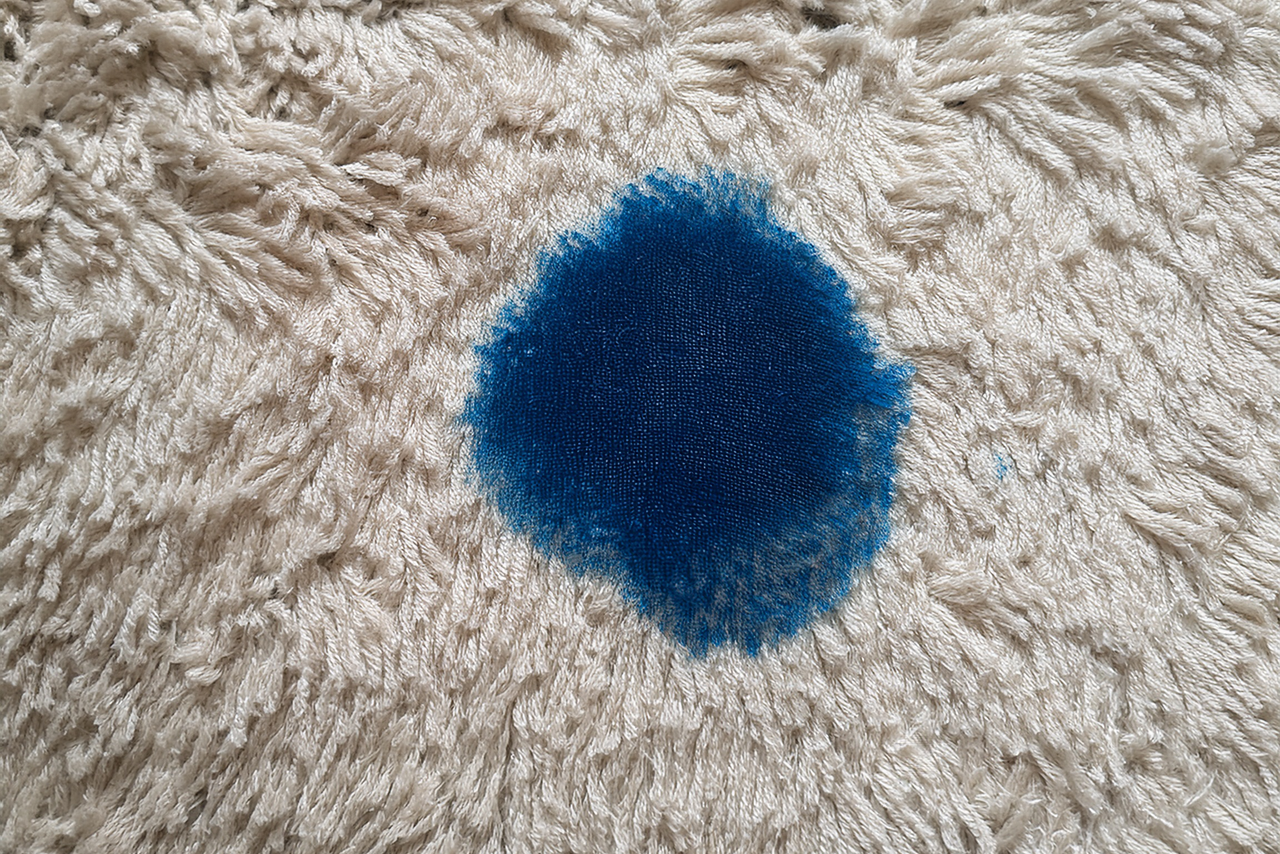
The blue ink stain on the carpet entered the public eye in 2018, when an American mother named Heather Duckworth shared the story on her Facebook page, Love, Faith & Chaos, a post many parents still remember as “The Blue Stain.”
One evening, she was trying to get her four young boys ready for bed.
The house was noisy, chaotic, and she was exhausted.
In the middle of this, she noticed something:
bright blue ink stains splattered all over their brand-new carpet.
One of her 2-year-old triplets had gotten hold of a pen.
It had exploded in his hand.
Ink was everywhere:
- on the carpet
- on his clean pajamas
- on his small hands and legs
She gasped.
Her husband started scrubbing the carpet.
She took her son to the bathroom to wash him.
They scrubbed the blue ink stain for an hour, but it barely faded.
The next day, professional cleaners tried again, and it still didn’t disappear.
The blue stain stayed — loud, ugly, and obvious on their tan carpet.
At that time, the stain meant one thing to her:
“I was so tired and so mad. That blue stain was just a big negative in my life. I hated it.”
A month later, her son — the one who had splattered the ink — was diagnosed with cancer.
Two years after that, he passed away.
Her son was gone.
The blue ink stain on the carpet was still there.
Over time, the meaning of that stain changed.
It became:
- a daily reminder of her son
- a reminder of how frustrated she had been over something so small
- a reminder that life is messy, and that the mess often comes from living, loving, and growing together
Years later she wrote that she would gladly have a million blue ink stains on her carpet if it meant she could have one more day with her son.
The stain never left the carpet.
But it changed how she saw almost everything else.
You can read one retelling of Heather Duckworth’s original post in this news article about the blue ink stain on the carpet.
What This Scene Really Shows About Us
At first glance, this sounds like a sad story about grief.
But it also quietly reveals how we treat our everyday lives.
Most days, our attention is on the carpet and the stain:
- the ruined thing
- the money we spent
- the effort we have to redo
- the image we want to protect
We focus on:
- the broken glass
- the scratch on the car
- the food on the floor
- the “wasted” time
In those moments, the object feels like the main character of the story.
We talk and react as if the carpet is what truly matters.
But time passes.
When we look back, the story almost always shifts:
- The carpet becomes background.
- The person in the scene becomes the center.
- What we remember most is how we spoke and how we looked at each other while standing over the stain.
The blue ink stain story presses a simple, uncomfortable truth:
We rarely regret the ruined object as much as we regret the tone we chose in that moment.
The carpet was expensive.
The stain really was permanent.
But in the long run, the emotion attached to that moment — anger, harsh words, or soft understanding — is what defines the memory.
The story doesn’t ask us to pretend mess doesn’t matter.
It asks a quieter question:
“When this scene becomes a memory, which part do you want to be proud of?”
A Simple Frame to Remember
We can’t control when pens explode or when life breaks our plans.
We also can’t control how long we will have the people we love.
The only thing we can reliably adjust is this:
What kind of ending we give to ordinary scenes.
One practical frame from this story is:
“Would I be okay if this were our last scene together?”
Not every conversation needs to be gentle or sweet.
Sometimes we have to correct, say no, or set a boundary.
But this question slightly shifts the angle:
- From “How do I fix this mess right now?”
- To “How do I handle this in a way I can live with later?”
It doesn’t mean we never raise our voice.
It doesn’t mean we never get frustrated.
It means we try, even in small ways, to keep the relationship more important than the object —
the person more important than the carpet, the child more important than the blue ink stain.
The stain may stay on the carpet for years.
The question is: what kind of stain do we leave on each other?
One Small Practice for Today
You don’t need a dramatic story to apply this.
Here is a small, realistic script you can test once today:
- Notice the trigger.
- A spill, a broken item, a repeated mistake, a delay.
- That moment when your chest tightens and your voice is ready to jump.
- Insert a half-second question in your head: “If this were the last scene, would I talk like this?”
- Adjust just one step.
- Keep the same message, but lower the volume.
- Or add one extra sentence, like:
- “I’m frustrated, but I’m not mad at you.”
- “Let’s clean this up together, then figure out how to avoid it next time.”
You won’t do this perfectly. No one does.
But even one slightly softer response changes the “ending tone” of that moment —
and that’s often what we carry with us for years.
If everyday messes and exhaustion often push you into shutdown mode, you might also like my essay on what is bed rotting and how to tell real rest from fake rest. It looks at the same question — what really matters in the long run — from an energy and recovery angle.
-> What Is Bed Rotting? Real Rest vs Fake Rest
One-line takeaway
Most of the time, what we truly want to protect is not the carpet, but the way we chose to treat each other while standing over the blue ink stain.