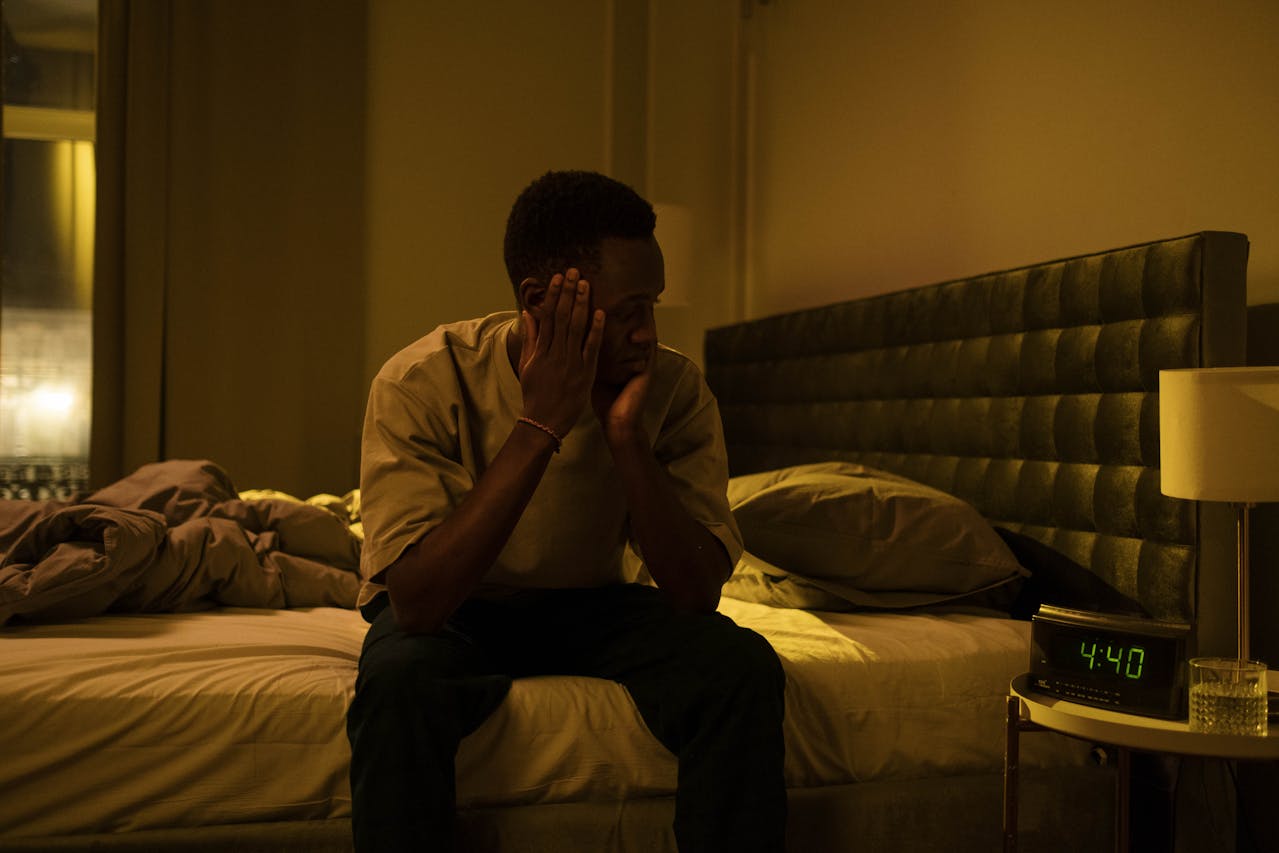
Hard to put your phone down at night even when you know you’ll be exhausted tomorrow?
That pattern has a name: revenge bedtime procrastination.
You stay up scrolling, watching “just one more” video, or doing anything except going to bed on time – as if you’re taking back the day that work, kids, or other people stole from you.
This article breaks down:
- what revenge bedtime procrastination really is,
- what it does to your brain and energy, and
- a realistic plan to stop it without giving up all your late-night freedom.
Observation – What Your Late-Night Scrolling Is Really Doing
A typical night might look like this:
- You’re tired, but finally done with work, chores, and messages.
- You tell yourself, “I deserve a little time for myself.”
- You open your phone “for 10 minutes.”
- Suddenly it’s 1:20 a.m. … again.
On the surface, it feels like:
- Reward – “At least now I get to watch what I want.”
- Control – “This is my time. No one can interrupt.”
- Numbing – “If I keep watching, I don’t have to think about tomorrow yet.”
But underneath, a few things are happening at the same time:
- Your sleep window (the easiest time to fall asleep) is slipping away.
- Screen light and stimulation are pushing your body clock later.
- You’re borrowing energy from tomorrow to pay for comfort tonight.
The result: you wake up foggy, promise yourself you’ll sleep early “tonight for real,” and repeat the cycle.
Analysis – Why You Delay Sleep Even When You’re Tired
In simple terms, revenge bedtime procrastination is your brain trying to reclaim control after a stressful day.
Revenge bedtime procrastination isn’t just “lack of discipline” – it’s a mix of three forces that hit at the same time.
1. Time scarcity and “stolen day” feeling
If most of your day belongs to work, family, or other people, your brain keeps a quiet score:
“I worked all day and still don’t feel like I had a life.”
Late at night becomes the only protected space where:
- no one is asking you for anything,
- notifications are mostly quiet, and
- you finally feel like an adult with autonomy.
So your brain resists sleep because sleep feels like the end of your freedom, not the start of recovery.
2. Decision fatigue and emotional avoidance
By nighttime, your willpower and decision capacity are low.
- All day you’ve been choosing, responding, and self-controlling.
- At night, your brain wants effortless dopamine – something that feels good without requiring choices.
Scrolling, streaming, and random browsing are perfect for this:
- You don’t have to plan.
- Content just comes to you.
- You can avoid thinking about tomorrow’s tasks, worries, or conflicts.
So you’re not just delaying sleep. You’re delaying uncomfortable emotions you expect to feel in bed: anxiety, guilt, or thoughts about tomorrow.
3. Biology: light, dopamine, and broken sleep pressure
A few biological systems get hijacked:
- Blue-ish light at night tells your brain “it’s still daytime,” which delays melatonin release and pushes your body clock later.
- Fast, rewarding content (short videos, endless feed) spikes dopamine in waves, teaching your brain that more scrolling = more reward.
- Each time you fight sleep and “win,” your brain learns: “If I ignore the tired feeling a little longer, it goes away.”
Over time, your natural sleepiness signals become less trustworthy, and your body clock drifts away from your real-life schedule (work, school, kids).
Design – A 4-Step Plan to Break the Cycle
You can’t fix revenge bedtime procrastination just by telling yourself, “Sleep earlier.”
You have to change what late night means to your brain.
Here’s a realistic 4-step design.
Step 1 – Define a “good enough” sleep window (not perfect)
Instead of aiming for an ideal 8-hour sleep right away, choose a minimum survivable target:
- Example: in bed by 12:30 a.m., wake at 7:30 a.m. (7 hours)
Make that your non-negotiable window for the next 2 weeks. You can push it earlier later – the first win is to stop the 2–3 a.m. nights.
Step 2 – Create a planned “revenge time” earlier
Your brain still needs personal time. If you remove it completely, it will rebel.
So you move the revenge — you don’t delete it.
- Pick a 90-minute “me time” block before your sleep window, e.g. 9:30–11:00 p.m.
- Decide in advance what this time is for:
- low-energy hobbies (reading, drawing, light gaming),
- talking with a friend,
- a show you actually want to watch (not random scrolling).
The rules:
- It’s guilt-free: this time is earned, not stolen.
- It’s finite: when the block ends, your evening wind-down starts.
Step 3 – Make the last 60 minutes “friction-heavy” for screens
The final hour before bed is where cycles usually restart.
Instead of relying on willpower, add friction:
- Plug your phone to charge outside the bedroom or across the room.
- Log out of addictive apps (or move them to a folder on the last screen).
- Set a “bedtime mode” on your phone:
- grayscale screen,
- Do Not Disturb on,
- home screen shows only basics: alarm, notes, reading app.
Then fill that hour with offline, low-stimulation activities:
- taking a warm shower,
- stretching / light mobility,
- reading a physical or e-ink book,
- journaling tomorrow’s top 3 tasks so your brain can let go.
For more detail on starting the day without your phone, check out my morning phone detox guide.
The goal isn’t perfection. The goal is:
“By the time I’m in bed, the hard part (getting away from screens) already happened.”
Step 4 – Create a morning “payoff” ritual
Your brain needs proof that sleeping earlier is worth it.
So design a simple morning reward that you only get if you hit your sleep window:
- 5 quiet minutes with coffee or tea before opening any apps.
- a short walk outside,
- a book you only read in the morning,
- or your “50-jump” wake-up method, if that works for you.
Link the habit:
“If I’m in bed by 12:30, I earn my calm morning ritual.
If not, I lose it.”
This gives your brain a future incentive that competes with the instant reward of late-night scrolling.
Example – One Evening Without Revenge Scrolling
Here’s how a realistic night might look when you apply the plan.
Assume:
- Wake: 7:30 a.m.
- Target sleep window: 12:30 a.m.–7:30 a.m.
- “Me time” block: 9:30–11:00 p.m.
7:00–9:00 p.m. – Finish obligations
- Wrap up work or study.
- Final check of messages / social apps.
- Light snack if needed, but avoid heavy meals right before bed.
9:00–9:30 p.m. – Transition
- Quick reset of your space (desk, dishes, next day’s clothes).
- Set tomorrow’s top 3 tasks on a sticky note or app.
- Plug in laptop so you’re not tempted to reopen it later.
9:30–11:00 p.m. – Planned “revenge time”
- Watch 1–2 episodes of a show you genuinely enjoy,
or - Play a game, craft, or read – something that feels like your life, not work.
Important:
- Use a timer so this block doesn’t “leak” later.
- When the timer ends, you don’t ask, “Do I feel like stopping?”
You act as if the day’s schedule simply moved on.
11:00–11:30 p.m. – Screen-friction setup + light movement
- Put phone on the charger outside the bedroom.
- Turn on Do Not Disturb / Bedtime mode.
- 5–10 minutes of stretching, tidying, or slow walking to let your brain downshift.
This is a good place to build a simple evening shutdown routine so your brain knows the day is over.
11:30 p.m.–12:10 a.m. – Wind-down
- Shower, skincare, or basic hygiene.
- Dim the lights.
- Read a physical book, journal, or listen to calm audio (no autoplay videos).
12:10–12:30 a.m. – In bed, nothing to do
- Phone already away.
- If your mind races, jot thoughts in a bedside notebook.
- Allow yourself to be “bored” – that’s usually the last step before sleep.
Is every night going to look like this? No.
But if you hit this structure most nights in a week, your late-night revenge habit will start losing power.
Edge Cases – When Stopping Is Harder
Parents of young kids
- Your only quiet time might really be after they sleep.
- Keep the “me time” block, but scale it:
- maybe just 45 minutes,
- and protect at least 6 hours of sleep whenever possible.
- Avoid starting new shows or games that are designed to be endless. Choose finite content: a book, a series with short episodes.
Shift workers
- Your “night” might be 3 a.m. to 11 a.m.
- Apply the same structure, just shifted:
- fixed sleep window,
- protected personal block before wind-down,
- friction for screens in the last hour.
ADHD / high impulsivity
- Rely less on internal control, more on external constraints:
- app timers with lockout,
- accountability partner (send a photo when you plug your phone in),
- pre-downloaded content so you’re not caught in infinite feeds.
High-stress periods (deadlines, exams, launches)
- Some nights will slip late. That’s normal.
- Instead of all-or-nothing, ask:
- “What’s the earliest I can reasonably sleep tonight?”
- “Which 30 minutes of scrolling can I cut without losing my mind?”
- Protect at least a minimum core of wind-down (20–30 minutes offline).
If you still wake up heavy and foggy after a late night, try the 1-minute 50-jump method to kick your body into wake mode.
Key Takeaways
- Revenge bedtime procrastination isn’t just bad discipline.
It’s a response to days that feel over-controlled and emotionally heavy. - At night, your brain looks for freedom, reward, and avoidance, and screens make that easy.
- To break the pattern, you don’t just force yourself to sleep. You:
- Set a realistic sleep window.
- Move your “me time” earlier and protect it.
- Add friction to late-night screens.
- Give your brain a clear reward the next morning.
- Progress is measured not by perfect nights, but by how often you stop the 2–3 a.m. spiral and choose recovery instead.
You don’t have to give up your evenings to be “healthy.”
You just need to design them so that both parts of you get what they need:
- the part that wants a life of your own,
- and the part that needs a brain that actually works tomorrow.
If you recognize revenge bedtime procrastination in your own nights, start with one small rule and one tiny reward.
Q1. How do I know if what I’m doing is really “revenge bedtime procrastination”?
A. If you regularly stay up late even though you feel tired and want more sleep, and you do it to “finally have time for myself” (scrolling, watching, gaming), it’s likely revenge bedtime procrastination rather than just occasional late nights.
Q2. Is revenge bedtime procrastination a mental disorder?
A. No. It’s not a formal diagnosis. It’s a behavioral pattern where your need for control and personal time wins over your long-term need for sleep. But if it’s causing serious daytime problems, talking with a professional can still help.
Q3. How long does it take to reset this habit once I start changing my routine?
A. Many people notice a difference in 1–2 weeks of keeping a consistent sleep window and adding friction to late-night screens. Full reset of your body clock and energy can take 3–4 weeks of mostly consistent nights.
Q4. What if my work or family schedule makes late-night “me time” the only option?
A. You don’t have to remove it. Shrink it and move part of it earlier if possible. Aim for a short, protected block (45–90 minutes) that still lets you get at least 6–7 hours of sleep most nights.
Q5. Are there any apps or tools that can really help?
A. Yes, as long as they add friction instead of more stimulation. Examples:
– Bedtime / Focus modes that block notifications and dim the screen.
– App limiters that lock social media or video apps after a set time.
– Simple alarm or reminder that tells you, “Phone goes to the charging spot now.”
Tools work best when they support a plan, not replace it.